
HEADLINE: “Are Net Zero’s Days Numbered?” By Kristen Walker
“ The notion of wind and solar farms sufficiently powering communities or every motorist switching over to an electric vehicle is unraveling. The world is waking up.”

ARE NET ZERO’S DAYS NUMBERED?
Are Net Zero’s Days Numbered?
By Kristen Walker
April 21, 2025
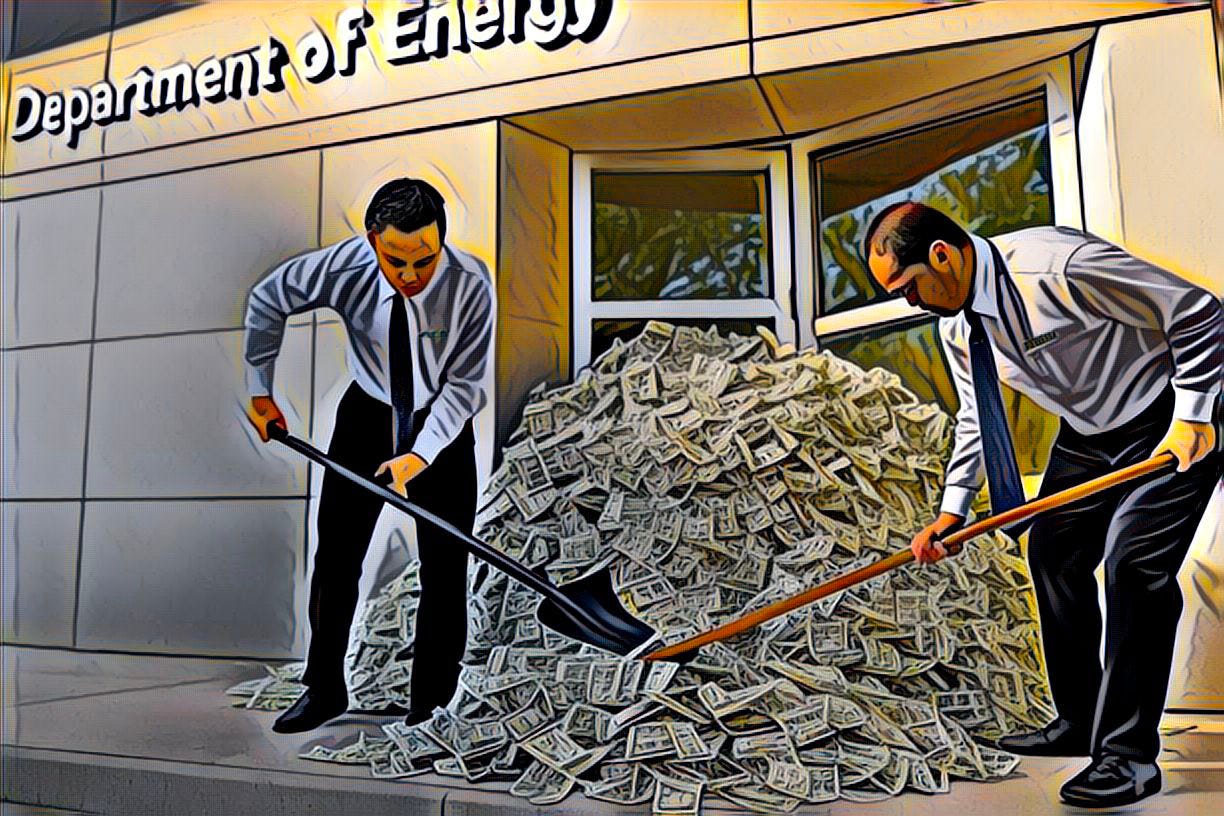
The notion of wind and solar farms sufficiently powering communities or every motorist switching over to an electric vehicle is unraveling. The world is waking up.
As we confront a precarious energy situation of surging demand with inadequate—and too often, expensive—supply, we cannot afford to play politics. Like most climate policies, people are seeing net zero for what it is: An unrealistic goal that stifles productivity and economic growth.
Talks of net zero, which aims for an overall balance between producing and removing greenhouse gas emissions in the atmosphere, began percolating among climate elites and national leaders soon after the Paris Climate Agreement was adopted hardly a decade ago. But the idea that energy production can be completely altered faces a reality check.
Europe has been chasing the net zero dream longer than most, and their experience should serve as a cautionary tale.
A report two years ago, whose first line declares it “a much-needed warning to America,” documents how Britain’s aggressive climate policies inflicted astronomical utility costs which have led to the nation’s subsequent stagnant economy.
Germany, also experiencing significant deindustrialization, economic decline, and skyrocketing electricity prices due to its own ambitious climate agenda, elected a new president two months ago, leaving some to speculate “a reduced focus on climate policies in a future government.”
Renewable energy sources that will supposedly save the world are proving to be as unreliable and costly as they are environmentally destructive. A necessary course correction is coming.
In November, U.S. voters cared more about economic and energy issues than climate policy. Donald Trump, who campaigned on drilling, fracking, and unleashing America’s energy, won handily. And some attribute “pro-energy” candidates’ big wins across the country to energy availability and cost concerns.
True to his word, Trump entered office with an “Unleashing American Energy” executive order that promises to increase energy exploration and production and reverse a number of Biden’s restrictive policies. Several weeks ago, EPA Administrator Lee Zeldin announced the agency will undertake 31 “historic” actions to strip the agency of unlawful and/or counterproductive regulatory power. Last week, Trump signed an executive order to reinvigorate the coal industry, ensuring “federal policy does not discriminate against coal production.”
All these measures will promote energy sources that are abundant, reliable, affordable, and more readily available—characteristics that generally align with fossil fuels as opposed to renewables. Dispatchable fossil fuels have much higher capacity factors than weather-dependent wind and solar.
Despite the popular narrative, we are not undergoing an energy transition but rather an energy expansion. Renewable sources like wind and solar are not replacing or substituting oil, coal, and natural gas but merely supplementing them. Fossil fuels have met more than 80% of our energy needs for decades; this will not change in the foreseeable future. We are using more coal, oil, and natural gas than ever just like we are employing more renewables wind and solar than ever before.
With energy demand continuing to climb, especially in the electricity sector, it is critical to keep reliable and affordable fossil fuels engaged. Their premature retirement and an overreliance on intermittent sources have led experts like the North American Electric Reliability Corporation to issue warnings that nearly two-thirds of the U.S. is at risk of electricity shortages.
The resurgence of domestic manufacturing and the construction of artificial intelligence data processing centers will depend on increasing our energy supply, lowering electricity costs, and stabilizing our grid--something for which renewables cannot appropriately handle.
Fossil fuels have done more to bring civilizations out of poverty, improve standard of living, and stimulate economic growth than any other energy source available. No nation has been able to truly prosper without them.
Countries like China and India know this all too well. China is still building new coal-fired plants at a rapid pace, reaching a 10-year high in 2024. India consumes more coal than Europe and North America combined; it comprises 55% of the nation’s energy needs. Both nations are expanding their use of fossil energy to grow their economies and improve quality of life. Who are first-world nations to tell them they should do otherwise?
Even with all the money spent and efforts to decarbonize through alternative energy sources, no measurable impact on the global level of reducing the increase in emissions has been detected. Most of these expensive and cumbersome climate policies aren’t moving the needle.
Yet, we have made great progress in air quality, pollution, and carbon levels through market-based solutions. Industry advancements like the shale revolution and liquified natural gas exports have and will continue to improve global emissions. And ongoing operational innovation will continue to improve energy efficiency, production, and transport.
Incorporating fossil fuels into our energy mix does not mean that we face an existential threat, climate crisis, or impending doom. It simply means we are prioritizing prosperity over decline, cost-effectiveness over exorbitance, reliability over inconsistency, and national security over vulnerability.
Despite what one believes about global warming, humans have shown incredible resiliency and adaptability to an ever-changing environment. Amusingly, it is the very resource despised by many that provides the protection, refuge, and comfort to withstand and navigate Mother Nature’s harsh realities.
Renowned scientist Bjorn Lomborg argues that lifting people out of poverty is the best way to fight climate change; wealthier countries are much better at protecting citizens.
Net zero should not come at the expense of abundance, dependability, and affordability. Fossil fuels are the best resource to provide consumers with readily available, inexpensive, and reliable energy.
Hopefully, the net zero craze continues to fade.
Kristen Walker is a policy analyst for the American Consumer Institute, a nonprofit education and research organization. For more information about the Institute, visit www.theamericanconsumer.org or follow us on Twitter @ConsumerPal
As De Angelo and Curry asserted in their recent report on the war on carbon (linked here at Word Merchant), Net Zero is morally indefensible.
It's a race. Net Zero climate and the pen engineered to measure us to carbon austerity- It's not just green energy awareness that needs to be on the wakey agenda, it's the the system of social credit that they want to fold us into.
Thank you for your posts.