
HEADLINE: “Given A PUC Chair Like This Managed Decline Advocate, Who Needs Enemies of Energy Security?” By THOMAS J SHEPSTONE
“Many years ago, another consultant and I did some planning for an Upstate New York community, like so much of that region, was going nowhere. I pushed some ideas I thought might help turn things…”

Given A PUC Chair Like This Managed Decline Advocate, Who Needs Enemies of Energy Security?
JUL 24


Many years ago, another consultant and I did some planning for an Upstate New York community that, like so much of that region, was going nowhere. I pushed some ideas I thought might help turn things around, whereas my partner, to my surprise, took the position that decline was inevitable and the challenge was only in managing it.
It was the first time I ran into the profoundly negative and leftist "managed decline” philosophy that pervades leftist and elitist thinking so prevalent today. I hated it, although I liked working with my fellow consultant, as our contrasting views usually served to reach a happy middle ground.
Managed decline is exactly what is put forward in a recent guest essay published at PA Environmental Digest Blog by Stephen M. DeFrank, Chairman of the Pennsylvania Public Utility Commission. It is a remarkably vacuous piece of writing that obscures the real energy issues, especially for the chair of an important energy regulator. Consider this part of the essay (emphasis in original):
[W]e are staring at a potential “energy gap” — a growing mismatch between the electricity our system can reliably deliver and the accelerating demand brought on by electric vehicles, heat pumps, industrial transitions, and energy-intensive sectors like data centers and AI computing.
Let me be clear: we cannot simply build our way out of this.
The idea that we can just pour concrete and erect new infrastructure fast enough to meet this demand is not only unrealistic-- it overlooks the many smarter, faster, and more flexible tools available to us.
That’s why the PUC is committed to what we call an all-of-the-above energy strategy.
This means using every tool in the toolbox to ensure resilience, affordability, and innovation.
It’s not about choosing winners or losing technologies-- it’s about deploying what works, where it works, and when it works best.
A cornerstone of this strategy is energy efficiency.
Just last month, the Commission approved Phase V of Pennsylvania’s Act 129 energy efficiency and conservation programs — building on more than 15 years of progress that has already delivered more than $4.9 billion in consumer savings.
These aren’t hypothetical benefits. They’re measurable, real-world results that reduce strain on the grid and lower utility bills for families and businesses.
But beyond how much energy we use is the question of when we use it.
Our electric grid must be built to serve the highest peaks of demand — even if those peaks only occur for a few hours each summer or winter.
That’s wasteful, costly, and increasingly unsustainable.
That’s why we’re emphasizing flexible demand solutions, including dynamic pricing, automated load control, and smart EV charging that avoids placing stress on local distribution systems.
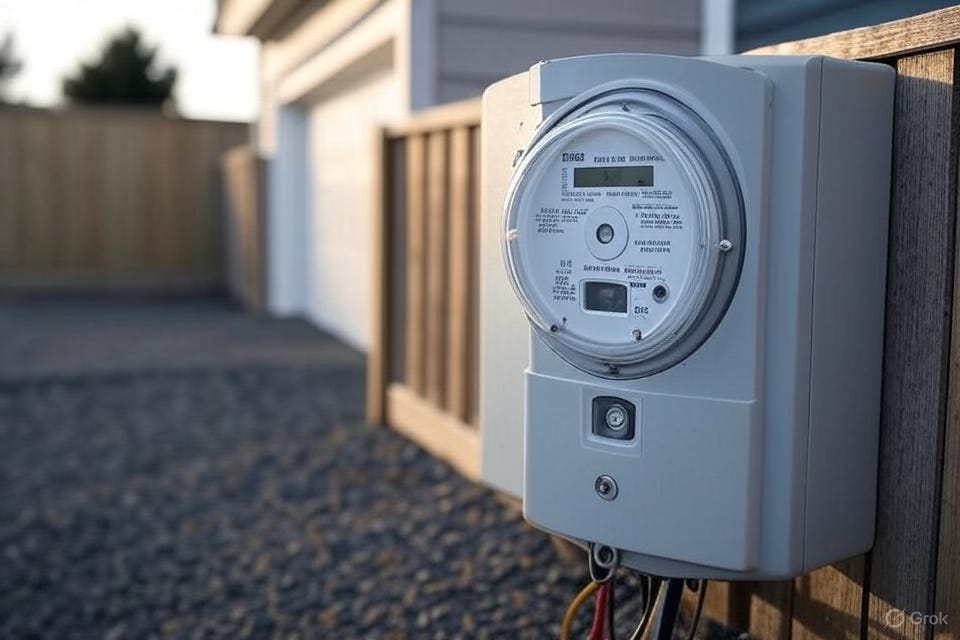
Pennsylvania utilities have already installed more than 5 million smart meters — unlocking opportunities for time-based rates, conservation voltage reduction, and greater consumer engagement.
These are not just technological upgrades. They are foundational elements of the modern energy marketplace.
Energy efficiency, of course, is a wonderful thing, but not in the context our PUC chair uses it. He’s saying we can’t solve meet our energy demands by building more power plants, but must instead regulate demand so as to cap it with smart meters and other tools. The idea is to make sure we’re not running our air conditioners when it’s hottest and demand is highest. It is a virtual recipe for managed decline.
Then, there is support for the incredibly naive all-of-the-above energy philosophy. No, that’s precisely the wrong direction and the one that’s taken us to energy creisis on our grids. Solar and wind are a distinct threat to the grid. They must be subsidized by ratepayers and taxpayers, they require massive new grid infrastructure to reach rural areas where the projects go, they are intermittent and unbreliable, and they require duplicative dispatchable baseload energy from coal, natural gas or nuclear, thereby adding huge costs and inefficiencies to the system. Every place they’ve been tried, solar and wind significantly raise electric bills. They are a big hurt on the grid, not a help.
Consider, too, the impact on energy efficiency, the Chairman’s claims to advocate above all else. Adding solar and wind to the grid doesn’t eliminate the need for real power plants, it just makes them vastly less efficient so as to accomodate the unreliables, reducing their capacity factors, which is why the bills inevitably go higher. Mr. DeFrank surely knows this. Barack Obama even knew and told us several years ago that elecrtricity would necessarily “skyrocket” if his policies were enacted. This tells me our PUC Chair is simply a true believer, but that’s not the leadership we need. We don’t want managed decline. We want energy security. Period.
#ManagedDecline #PUC #Pennsylvania #EnergyDemand #AlloftheAbove #Unreliables #Electricity #ElectricPrices
BOTTOMLINE: “Consider, too, the impact on energy efficiency, the Chairman’s claims to advocate above all else. Adding solar and wind to the grid doesn’t eliminate the need for real power plants, it just makes them vastly less efficient so as to accomodate the unreliables, reducing their capacity factors, which is why the bills inevitably go higher. Mr. DeFrank surely knows this. Barack Obama even knew and told us several years ago that elecrtricity would necessarily “skyrocket” if his policies were enacted. This tells me our PUC Chair is simply a true believer, but that’s not the leadership we need. We don’t want managed decline. We want energy security. Period.”